
Editorial Workflow Software for Content Teams
Plan, assign, create, review, approve, schedule, and publish content in one connected workflow. Narranta gives writers, editors, and content managers a shared workspace for moving every piece of content from idea to publication.
Complete Guide to Content Operations
SaaS Content Strategy for Growing Teams
How to Build a Content Approval Process
Key Capabilities
Designed to elevate collaborative writing teams with features that just make sense.
Custom Workflow Stages
Build an editorial workflow around the way your team actually works. Create stages for pitching, drafting, editing, review, approval, and publication.
Editorial Assignments & Deadlines
Assign writers, editors, and contributors to content, set deadlines, attach briefs, and keep every piece of work moving through the editorial pipeline.
Review & Approval
Keep editorial feedback, review tasks, and approval decisions connected to the content as it moves through your workflow.
Content production breaks down when everyone manages work differently.
Without a shared editorial workflow, content teams tend to fragment. Ideas live in documents, assignments arrive through messages, drafts sit in separate tools, feedback lands in Slack, approvals happen over email, and deadlines are tracked in spreadsheets. Editors end up with no single view of what is actually in progress.
- Writers don't know what to work on next
- Editors can't see the full production pipeline
- Feedback gets lost outside the draft
- Deadlines and approvals have no shared visibility
One place to see who is working on what.
Manually chasing authors about deadlines and status updates pulls editors away from editing. Narranta makes it straightforward to assign content, manage due dates, and move work through the editorial pipeline — giving editors a clear view of where every piece of content stands.
- Single-click writer and editor assignments
- Status notifications across the pipeline
- Centralized brief and asset uploads
Keep editorial feedback where it belongs — on the draft.
When review notes live outside the draft, reviewers and writers lose context. Narranta lets editors and reviewers leave inline comments directly on draft paragraphs, keeping editorial communication organized and archived within the workflow.
- Inline commenting on article content
- Thread resolution to track open feedback
- @Mentions for direct reviewer notifications
"The transition to headless architectures is not just a trend..."
Could we expand on this? Let's add a quick paragraph linking to our comparison guide.
Approval is a step in the workflow, not a separate process.
Content approval should be a defined stage inside the editorial workflow, not a request sent outside it. Narranta gives teams a clear approval step so editors and reviewers always know what is waiting for sign-off, and what has already been cleared.
- Approval status visible as part of the pipeline
- Reviewers assigned within the workflow
- Approval decisions recorded before publication
How to Build a Content Approval Process
How Narranta Compares
Most teams run their editorial workflow on a mix of spreadsheets, Slack, a task board and a CMS. Here is what changes when the workflow lives in one place.
| Spreadsheet + Slack | Project management board | CMS on its own | Narranta | |
|---|---|---|---|---|
| Where work is tracked | Spreadsheet, updated by hand | Task cards, separate from the draft | Published posts only | Each article, with its stage and owner |
| Who owns the next step | Whoever remembers | Assignee on the task | Not tracked | One named owner per stage |
| Where feedback lives | Slack threads and email | Task comments, away from the draft | Not supported | On the draft itself |
| Approvals | A message saying "looks good" | A column that can be skipped | Publish permission only | A required stage in the workflow |
| Deadlines | Publish date only | Task due dates | Schedule date only | Due dates per assignment and stage |
| Publishing | Copy and paste into the CMS | Copy and paste into the CMS | Built in | Built in, after approval |
How Teams Use Narranta
Three common setups, and the editorial workflow each one runs.
The founder stopped being the queue.
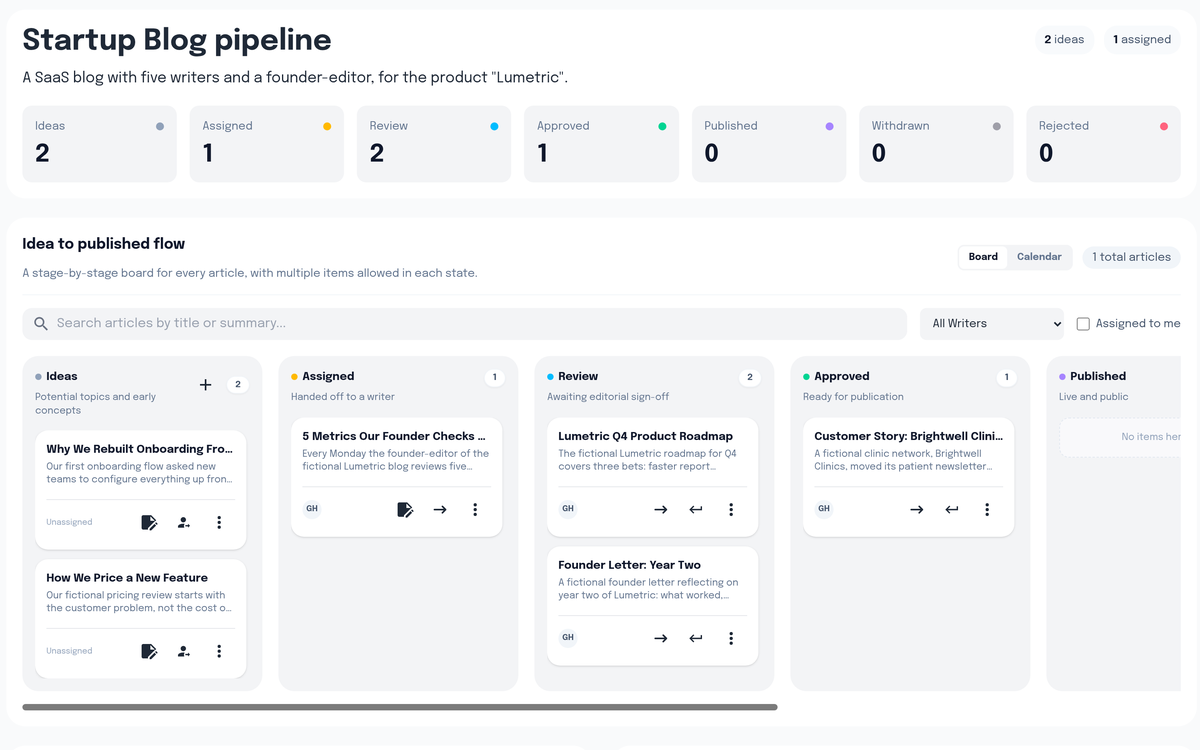
A SaaS blog with five writers and one founder who edits everything. Every draft goes through Draft, Edit, Founder review, Scheduled. The founder sees only what is waiting for them, and writers can see their draft has been reviewed without sending a message to ask.
Brand and product sign-off, in order.
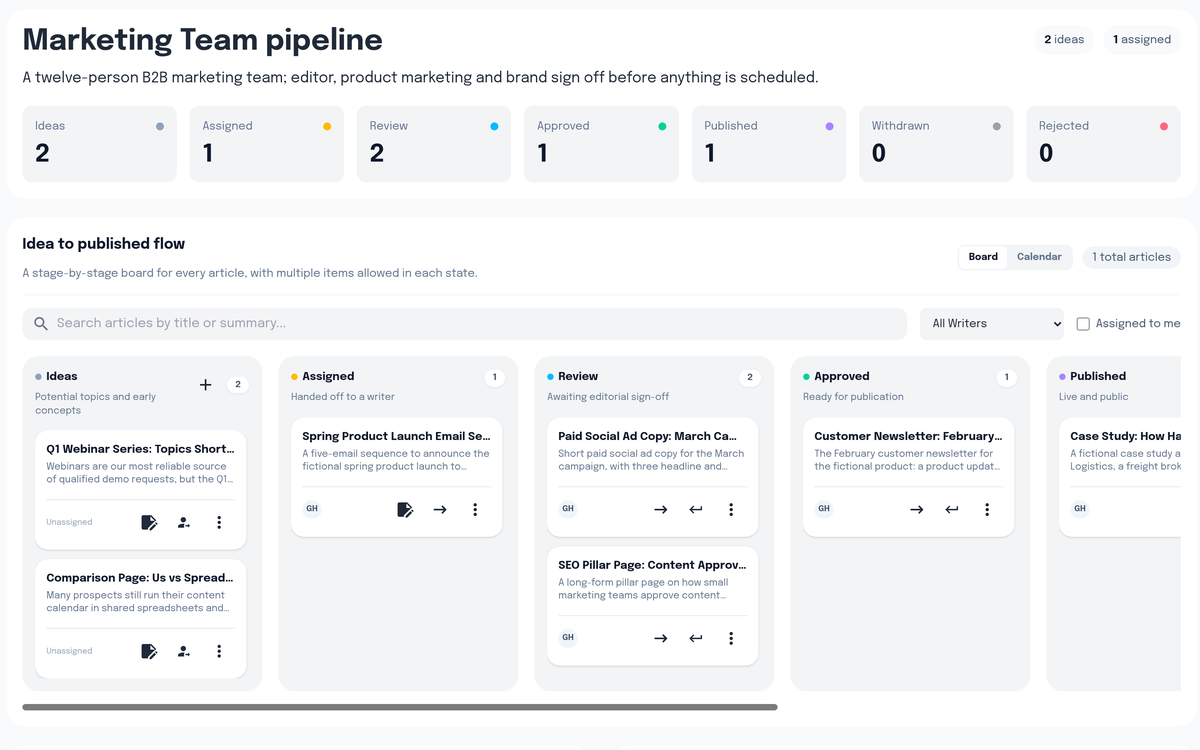
A twelve-person team where each article needs the editor, then a product marketer, then brand. Approval is a stage, so a post cannot be scheduled until all three have signed off, and nobody has to search Slack to find out whether they did.
Each client kept separate.
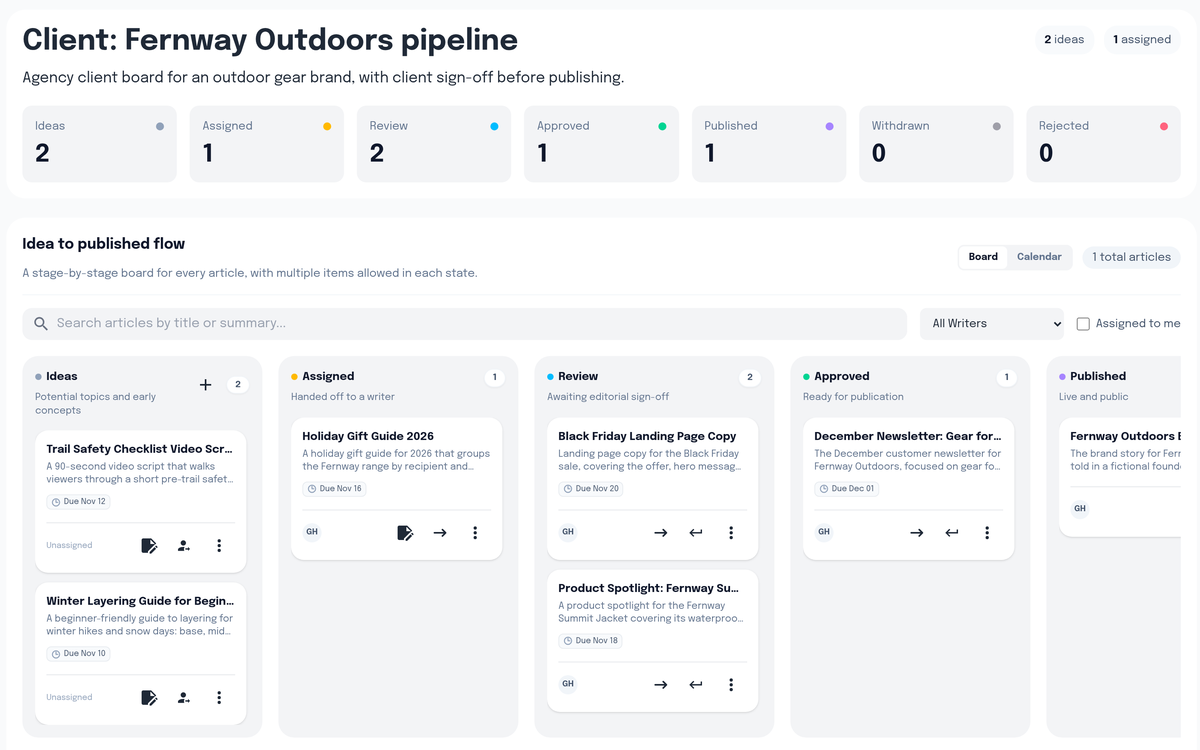
An agency running content for several clients. Each publication has its own workflow, approvers, and calendar, so a draft for one client never shows up in another client's review queue.
Frequently Asked Questions
Everything you need to know about Narranta's module.

Empower your content team today.
Join modern publishing and marketing departments managing their editorial pipeline on Narranta.