
Narranta vs Substack
Substack is built for individual writers and newsletters, while Narranta is built for professional publishing teams that need structured workflows, brand control, multi publication management, and flexible content operations.
Feature Comparison
How Narranta stacks up against the competition.
| Feature | Narranta | Substack |
|---|---|---|
| Use Case Focus |
Built for editorial teams and content organizations
|
Built primarily for individual newsletter creators |
| Editorial Workflow |
Structured review stages, approvals, and collaboration
|
Basic draft and publish workflow |
| Multi Publication Management |
Manage multiple brands and publications from one system
|
Single publication per account model |
| Brand Control |
Full control over layout, design, and publishing experience
|
Limited to Substack branding and structure |
| Revenue Model |
Flat SaaS pricing with no revenue percentage fees
|
Takes percentage of paid subscriptions |
| CMS Integration |
Push content to WordPress, Wix, Ghost, or custom stacks
|
Closed ecosystem with limited external integration |
| Team Collaboration |
Multi user roles, permissions, and editorial coordination
|
Designed mainly for solo creators |
The Narranta Advantage
Substack is a strong platform for individual newsletters, but Narranta is designed for organizations that need scalable publishing systems, editorial structure, and full brand ownership.
Built for Teams, Not Just Writers
Manage editors, writers, reviewers, and multiple publications in one system.
No Revenue Cuts
Keep full control of your monetization without platform percentage fees.
Scale Content Operations
Move from single newsletter publishing to full editorial operations.
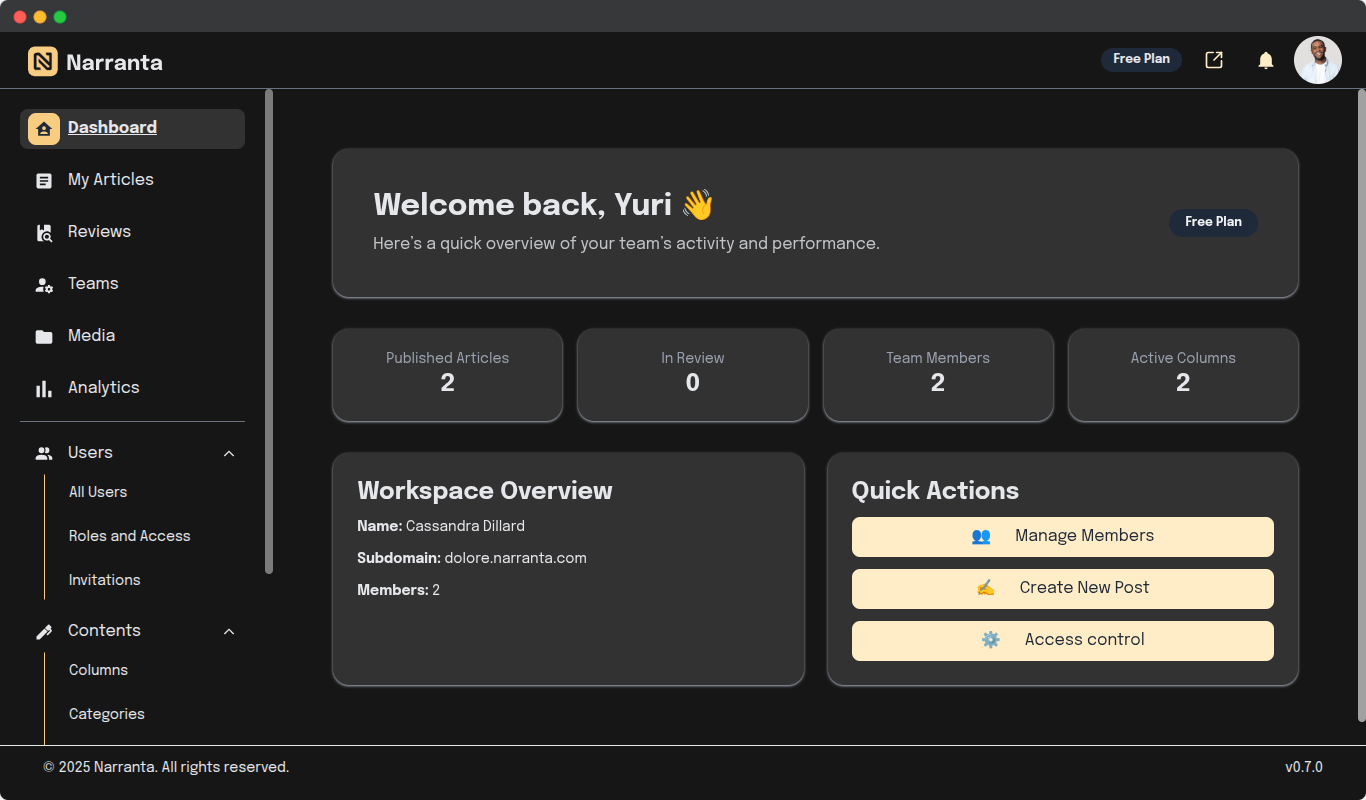
Substack vs Narranta: Creator Platform vs Publishing System
Substack has become one of the most popular platforms for independent writers and newsletter creators due to its simplicity and built in distribution model. It works well for individuals who want to start publishing quickly without managing technical infrastructure.
However, as content operations grow beyond a single writer, limitations begin to appear. Teams often need structured editorial workflows, collaboration systems, multi publication management, and stronger brand control over their publishing environment.
Narranta is designed specifically for these scenarios, providing a collaborative publishing system for teams and organizations that need to scale content production beyond individual newsletters.
Why Teams Outgrow Substack
Substack is centered around the individual creator model. While this is effective for solo newsletters, it becomes limiting when organizations require multiple contributors, editorial review processes, and structured publishing pipelines.
Narranta addresses this gap by introducing structured content operations, enabling teams to manage writers, editors, approvals, and multiple publications from a single unified system.
Editorial Workflows and Collaboration
Many organizations using Substack eventually rely on external tools such as Google Docs or Notion to manage collaboration. This creates fragmented workflows that slow down publishing and increase operational complexity.
Narranta centralizes these workflows by providing built in editorial stages, review systems, contributor roles, and publishing coordination tools designed for teams.
SEO and Brand Ownership
Substack helps creators reach audiences within its ecosystem, but long term brand and SEO authority remain closely tied to the platform itself.
Narranta allows organizations to publish on their own domains, helping them build independent SEO authority and long term brand equity that is not dependent on a third party platform.
Frequently Asked Questions

Ready to switch to Narranta?
Join modern content teams building their publications on a platform designed for collaboration.