

Content teams use these two terms interchangeably all the time. And honestly, the confusion makes sense. They sound similar, they live in similar tools, and they both involve dates and content.
But they are not the same thing. And mixing them up is one of the quieter reasons content operations stall as teams grow.
Understanding the difference helps teams plan more effectively, collaborate more clearly, and build a publishing process that actually holds up under pressure. It also makes it easier to choose the right tools when you need them.
What Is an Editorial Calendar?
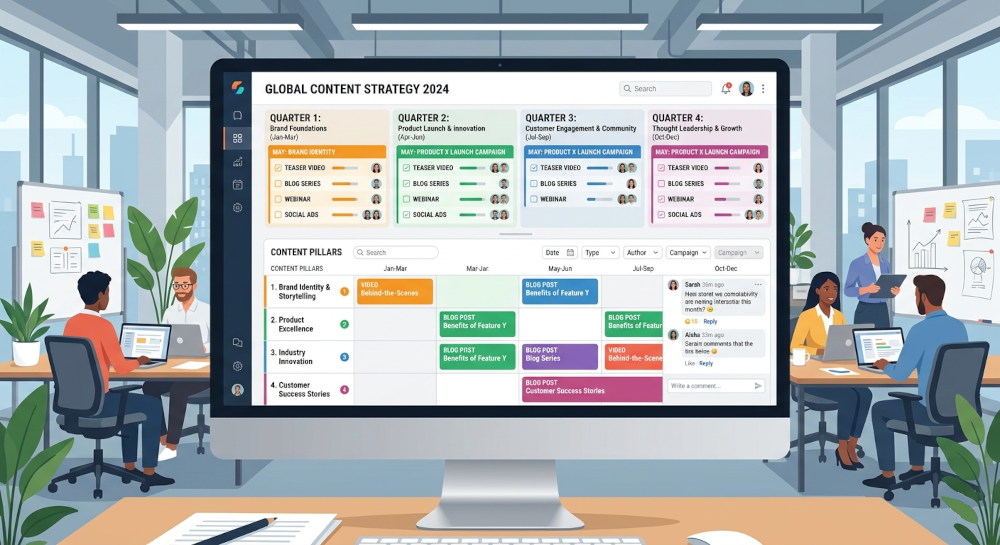
An editorial calendar is a strategic planning tool. It outlines what content will be created and why.
It sits at the higher level, helping teams align content with business goals, audience needs, campaigns, and publishing priorities. It is less about tasks and more about intent.
An editorial calendar typically includes:
- Content themes
- Planned topics
- Publishing dates
- Target audiences
- Campaign objectives
- Content owners
A SaaS company might use an editorial calendar to map out content themes for an entire quarter, something like customer retention in January, product education in February, and industry trends in March.
The editorial calendar answers one question: what content are we planning to publish?
What Is a Content Calendar?
A content calendar focuses on execution.
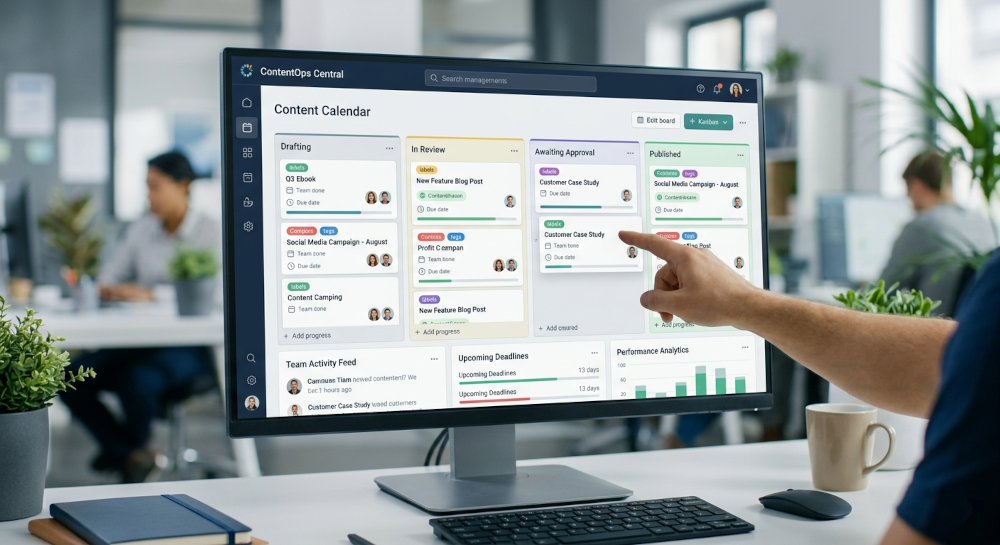
Once content has been planned at a strategic level, the content calendar tracks the tasks, deadlines, and workflow stages required to actually get each piece published.
A content calendar typically includes:
- Draft deadlines.
- Review deadlines.
- Approval stages.
- Assigned writers.
- Editors and reviewers.
- Publication status
Rather than focusing on strategy, a content calendar helps teams manage the day-to-day work required to move content from brief to live.
The content calendar addresses a different question: how will this content actually be published?
Editorial Calendar vs Content Calendar: The Key Differences
Editorial Calendar — Strategic planning focuses on content goals, takes a long-term view, organises topics and campaigns, and helps determine what to publish.
Content Calendar — Operational execution focuses on publishing tasks, takes a short- to medium-term view, organises workflows and deadlines, and helps determine how content is published.
The important thing to understand is that these two systems work best when they work together.
Editorial workflow → What Is an Editorial Workflow? A Practical Guide for Content Teams
Why Content Teams Need Both
Most teams start with a simple spreadsheet and quickly discover that planning content is only half the challenge.
Without a clear process for execution, teams miss deadlines, delay reviews, create bottlenecks with approvals, and publish inconsistently.
But focusing only on execution creates its own problem. Teams may publish regularly without any real strategy or alignment with business goals. Output without direction.
Successful content operations combine both approaches.
The editorial calendar provides direction. The content calendar provides structure. Together they create a publishing system that actually repeats.
Content Workflow Bottlenecks → Content Workflow Bottlenecks: Causes and Fixes for Teams
How They Work Together in Practice
Consider a marketing team planning content for the next quarter.
The editorial calendar might include a product launch article series, a set of customer success stories, an industry research report, and a batch of educational content for new users.
Once those initiatives are approved, the content calendar manages the workflow. It tracks writing assignments, editing schedules, stakeholder reviews, publishing deadlines, and where each piece sits in the workflow at any given moment.
This creates a clear connection between strategy and execution. Every article has a purpose. Every task has a deadline. Nothing exists in isolation.
Common Mistakes Teams Make
Treating them as completely separate systems
Some organisations keep their editorial calendar in one tool and their content calendar in another. This almost always leads to duplicated work, outdated information, and communication gaps between the people doing the planning and the people doing the publishing. A better approach is to connect planning and execution inside a single workflow.
Focusing only on planning
Planning content is the easy part. Executing it consistently is much harder. Without proper workflow management, even the most carefully considered editorial plans can fail to work in practice.
Ignoring workflow visibility
Writers, editors, and stakeholders all need to see where content stands at any given moment. When teams rely on email chains and spreadsheets to communicate progress, they genuinely struggle to see where things are stuck and why.
Overcomplicating the process
Larger publishing organisations may need multiple review stages and formal approval chains. Smaller teams usually benefit from simpler workflows that keep things moving without unnecessary delays. The right level of structure depends on the team, not on what sounds most impressive.
Features to Look for in Editorial and Content Calendar Software
Modern content teams typically use software that combines editorial planning and workflow management in one place.
When evaluating tools, look for:
- Content scheduling.
- Editorial planning views.
- Workflow stages.
- Team assignments.
- Approval management.
- Publishing status tracking.
- Collaboration tools.
- Reporting and visibility
The goal is not just to organise content ideas, but also to provide reporting and visibility. It is to manage the entire publishing lifecycle from the first planning conversation to the moment something goes live.
Workflow management → Editorial Workflow Tools: How to Choose the Right System for Your Content Team
How Narranta Supports Both
As content operations grow, managing strategy and execution in separate tools becomes increasingly painful. Things fall through the gaps between systems.
Narranta brings editorial planning and workflow management together in one platform so teams do not have to context switch between where they plan and where they work.
Teams can organise content initiatives, track publishing workflows, assign responsibilities, manage approvals, monitor content progress, and maintain visibility across everything that is happening at once.
This keeps content plans aligned with organisational goals and reduces the workflow bottlenecks that slow down most growing teams.
Bringing Planning and Execution Together
Editorial calendars and content calendars serve different purposes, but both are essential for content operations that actually work.
The editorial calendar helps teams decide what to create. The content calendar helps teams get it across the finish line.
Organisations that connect planning with execution are better positioned to publish consistently, improve collaboration, and scale without creating chaos. Whether you manage a small content team or a growing publication, understanding the role of each calendar is one of the most practical steps toward building an editorial process that holds up over time.