

Publishing tools work beautifully until you add a team. If you are running a media company, corporate blog, university publication, or multi writer brand, you have probably experienced this. Everything works fine with one writer. Then a second writer joins, then an editor, then a content lead, and maybe even a whole new vertical. Suddenly, your publishing platform starts to feel fragile. Not broken. Just not designed for what you are becoming.
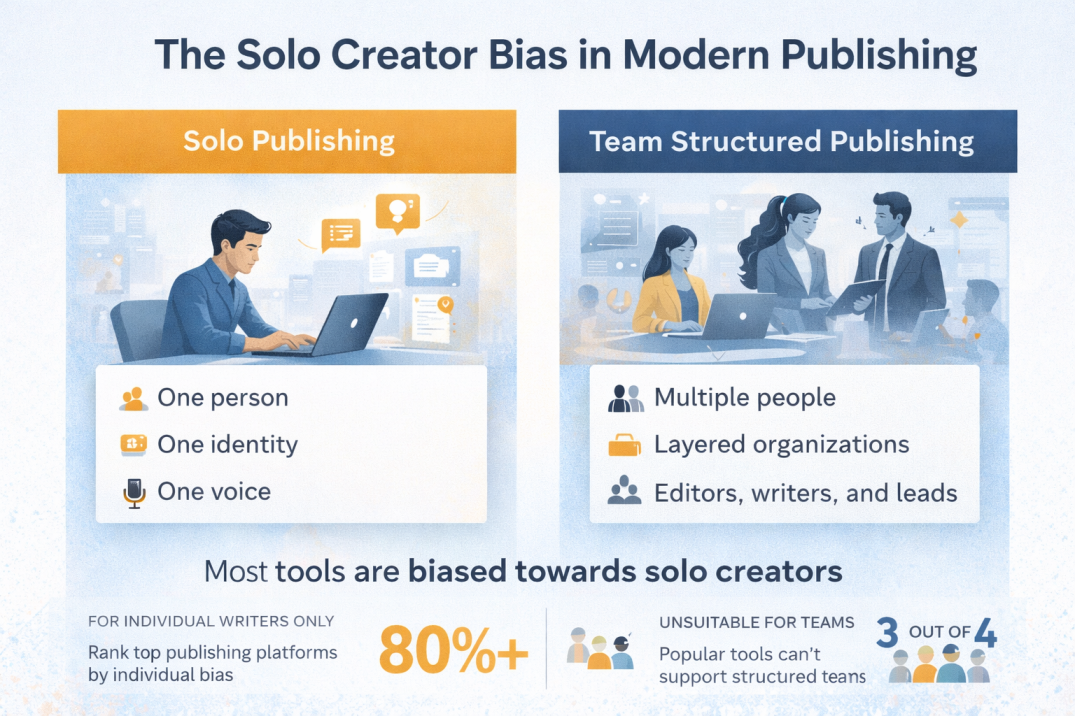
The Solo Creator Bias in Modern Publishing
Most publishing tools were built for individuals. Platforms like Substack and Ghost made it easy to launch and monetize a publication. They lowered the barrier to entry and changed the internet. But they were optimized for one creator, one voice, one primary identity. Not layered organizations, editorial hierarchy, or structured team environments.
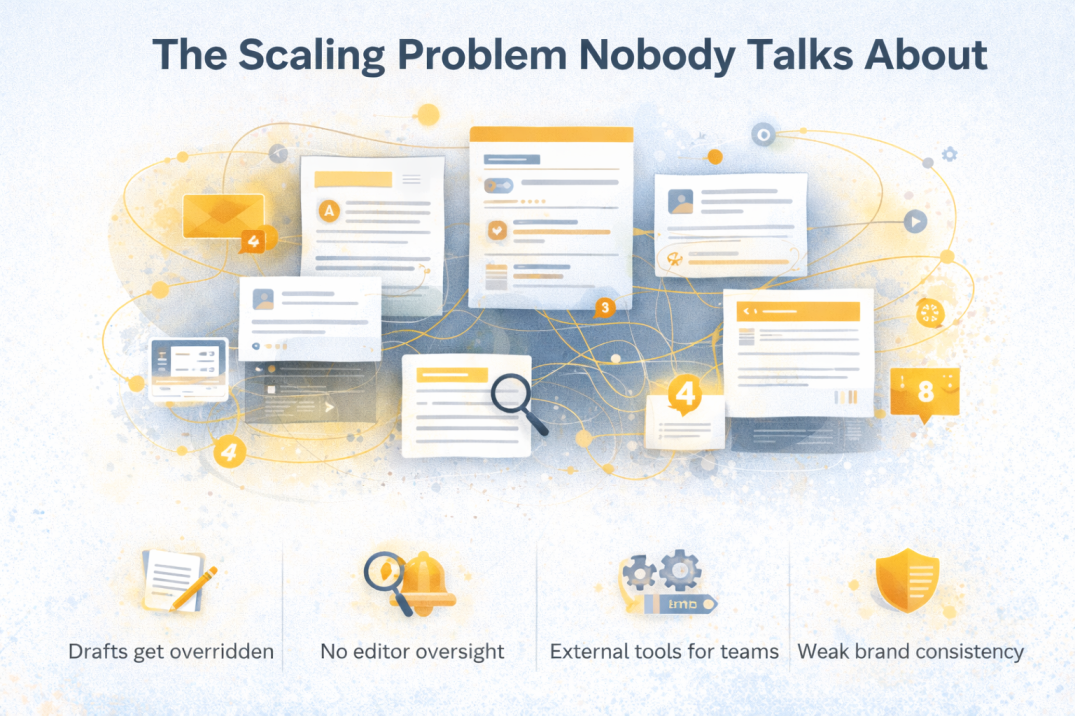
The Scaling Problem Nobody Talks About
When you add structure, complexity appears. You start needing clear role based permissions, editor and writer controls, sub brands or verticals, department level ownership, and isolated spaces under one parent brand. Without that architecture, things get messy. Writers override drafts, editors lose clarity, teams rely on external tools to coordinate publishing, and brand consistency weakens. The tool still works. But it does not scale.
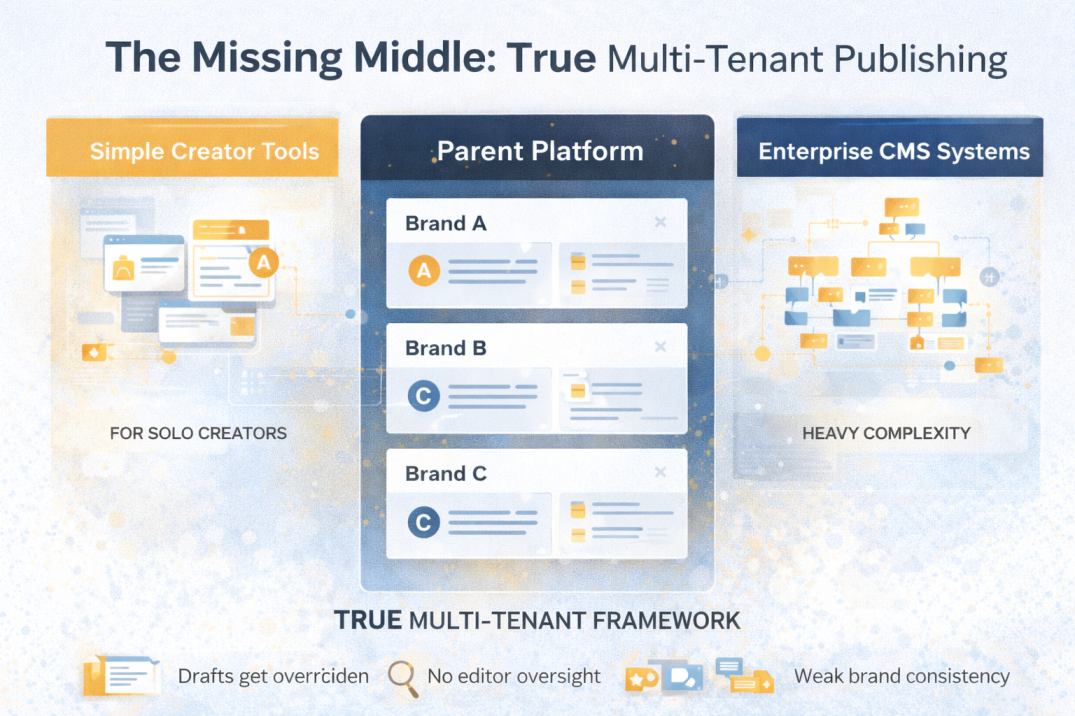
The Missing Middle: True Multi Tenant Publishing
There is a large gap in the market. On one end, simple creator tools. On the other, heavy enterprise CMS systems. Very few platforms are built as true multi tenant publishing systems where multiple organizations or structured teams can operate cleanly inside one framework. If you are running a growing digital media startup, a corporate editorial team, a university with multiple department blogs, or an agency managing multiple content brands, you do not need more features. You need structure.
So… Is Narranta a Good Product?
Narranta is a publishing platform built for teams. It was designed from the ground up with multi tenant architecture, brand isolation per organization, sub publishers or editorial verticals, role based dashboards, and structured team management. Now here is the honest part. Narranta is a good product. Or is it. Maybe it is. Maybe it is still becoming one. It is Version 1, and it is built around a very specific belief. Publishing should scale with your organization, not collapse under it. Narranta does not try to be everything for everyone. It is not trying to replace every CMS. It is trying to solve one structural problem well: team publishing without chaos.
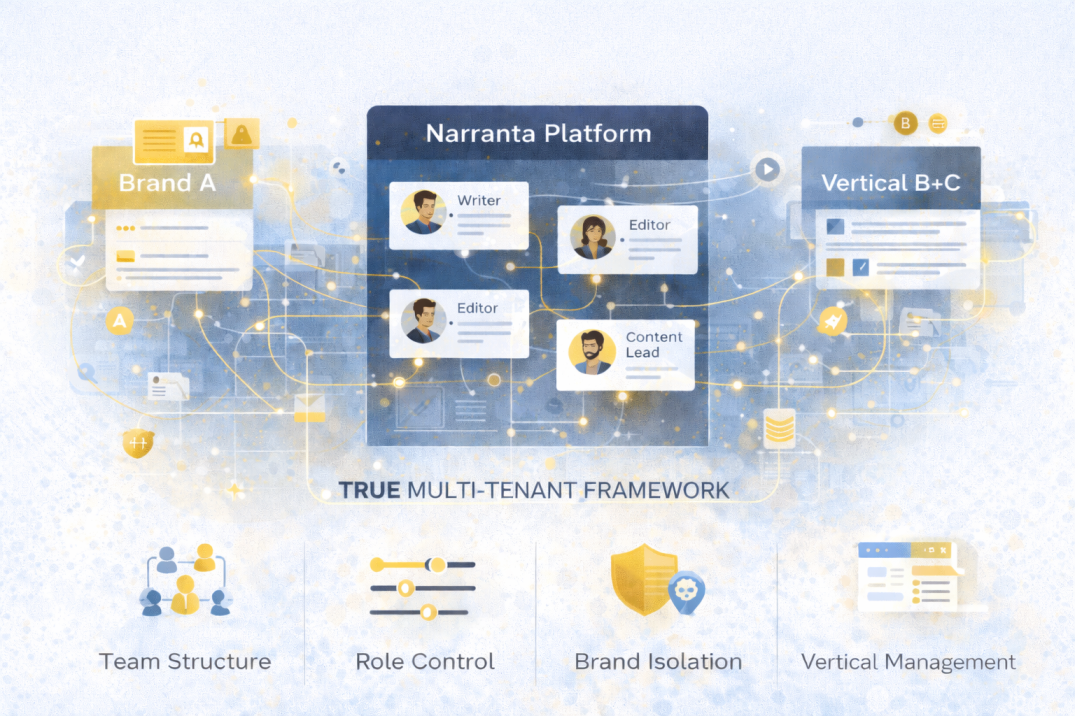
The Future of Publishing Is Structured
The first era of online publishing empowered individuals. The next era empowers organizations. Multiple voices, clear hierarchy, brand separation, permission control, and scalable architecture. If you are searching for a publishing platform for teams, a CMS for multiple writers, a multi tenant blog system, or software built for editorial structure, Narranta was built in that direction. Maybe it is exactly what you need. Maybe it is early. But it is intentional. And it is built for scale. Start building your narrative at scale.